
Low Temperature Recirculating Chiller
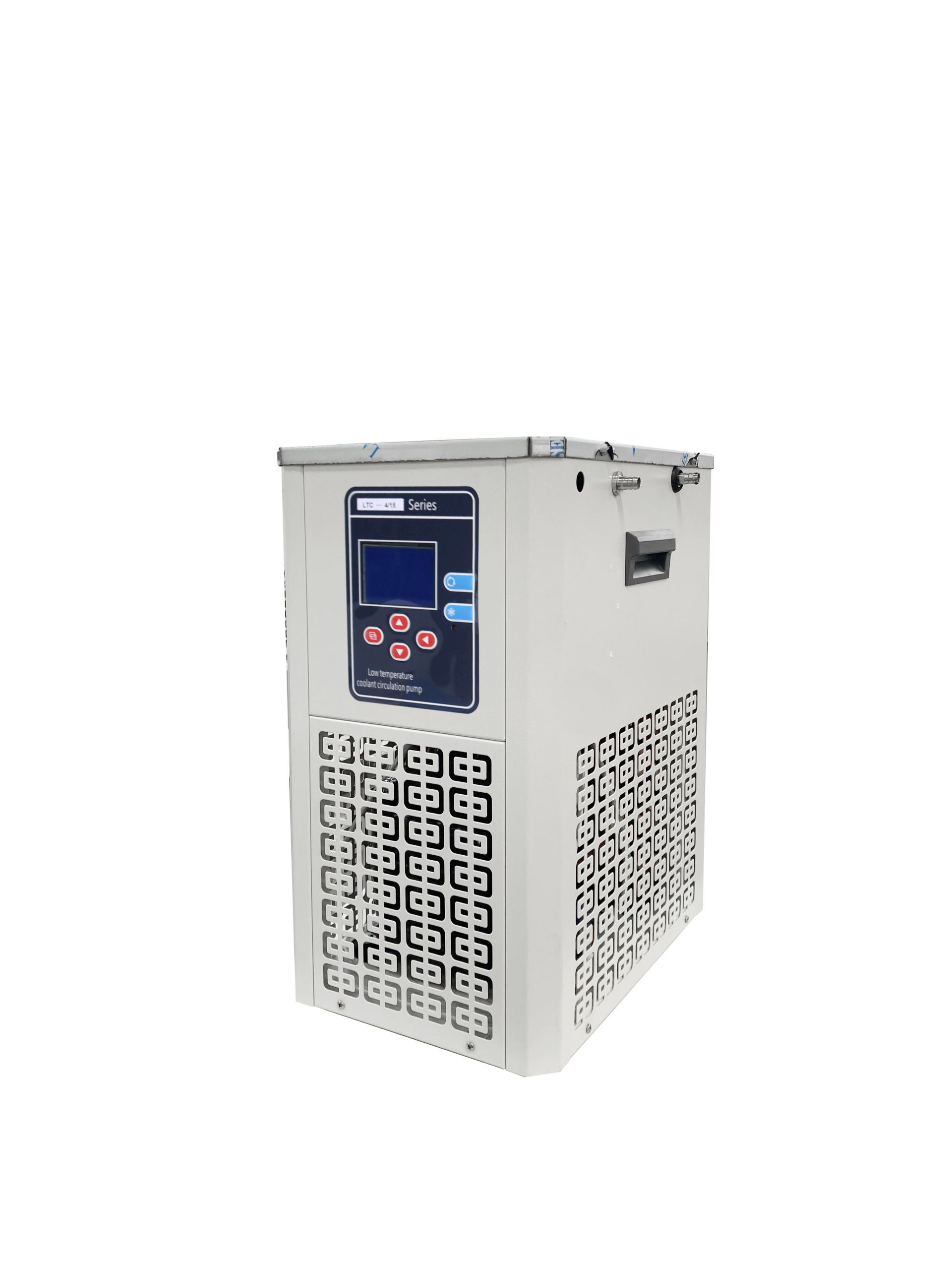
Low Temperature Recirculating Chiller
Closed-loop cooling equipment for external reactors, condensers, instruments and laboratory process systems.
✓ ISO 9001 Certified Factory
✓ CE Certified · 1-Year Warranty
✓ 7–15 Day Factory Delivery
✓ OEM / ODM · Export to 40+ Countries
✓ CE Certified · 1-Year Warranty
✓ 7–15 Day Factory Delivery
✓ OEM / ODM · Export to 40+ Countries
product details
Product overview
Low-temperature recirculating chillers provide a closed coolant loop for external equipment. Working temperature, load, flow and lift determine the right model much more than nominal room-temperature capacity alone.
Where this route fits
- Reactor cooling
- Condenser cooling
- Low-temperature circulation for external process equipment
- Laboratory and pilot cooling loops
What to provide before quotation
- Required working temperature, not just room-temperature capacity
- Cooling duty and continuous or batch operating pattern
- Required flow, lift and loop interface
- Preferred coolant medium and condenser type
- Ambient conditions, utilities and destination voltage
Specification summary
| Temperature options | -40°C, -60°C, -80°C, -100°C and -120°C |
|---|---|
| System | Closed circulation, non-volatile coolant loop |
| Cooling type | Air cooling or water cooling |
| Control | PID or PLC options by model |
| Typical series | DLSB and DFY low-temperature systems |
| Applications | Reaction cooling, condenser cooling, low-temperature circulation |
Configuration options typically discussed before order release
- Temperature route selected from -40°C to -120°C family examples
- Air-cooled or water-cooled condenser structure according to site utilities
- PID or PLC control package depending on plant-side integration need
- Closed-loop external circulation arrangement sized by flow and lift
- Explosion-proof and export-voltage discussion where required
Typical delivery scope discussion
- Closed-loop chiller main unit with external circulation path
- Cooling-structure and control route matched during quotation
- Guide-led sizing path covering working temperature, duty, flow and lift
- Accessory, packing and export notes confirmed according to the project scope
Installation and site-preparation notes
- Confirm actual working-temperature duty instead of quoting only room-temperature capacity
- Confirm loop piping length, height difference, interface size and coolant medium
- Confirm condenser structure, ambient condition and destination-site power standard
Related resources
Frequently asked questions
How is cooling capacity selected?
Cooling capacity should be checked at the actual working temperature, not only at room temperature.
What coolant can be used?
Industrial alcohol or thermal oil may be used depending on the required temperature range and equipment configuration.
Low Temperature Recirculating Chiller Application and Selection Guide
Use Low Temperature Recirculating Chiller when comparing recirculating chiller, laboratory chiller, cooling circulator for controlled cooling support for reactors, condensers, rotary evaporators and temperature-sensitive process equipment. This section brings together source-backed details, system-fit notes, and quote-preparation points so procurement teams can review the model in context.
Use the details below to confirm fit before quotation. The source-backed notes, process-fit guidance, and related equipment links are organized for buyer review.
Source-backed details to review
- Temperature options: -40°C, -60°C, -80°C, -100°C and -120°C
- System: Closed circulation, non-volatile coolant loop
- Cooling type: Air cooling or water cooling
- Control: PID or PLC options by model
- Typical series: DLSB and DFY low-temperature systems
- Applications: Reaction cooling, condenser cooling, low-temperature circulation
- Selection basis: Confirm target temperature, cooling capacity at the target point, reservoir volume, pump flow and connection size.
- System matching: This family is commonly matched with reactors, condensers and rotary evaporator cooling loops.
How this model fits into a process system
Use this page to compare the model against nearby UnionClay products, then match it with reactors, chillers, heating and cooling circulators, vacuum pumps, filtration units, rotary evaporators or distillation systems according to the process route. The best choice depends on cooling demand, target temperature, heat load, reservoir volume, pump flow, connection size and ambient conditions.
Before requesting a quote
Share the target capacity, working medium, temperature or vacuum requirement, voltage, connector requirements and any customization needs. UnionClay can use those details for model matching, equipment selection and project quotation support.
This content uses UnionClay customer parameter sheets and the UnionClay selection guide as the basis for temperature-control positioning.
Model Selection and Related Equipment
Compare Low Temperature Recirculating Chiller with related UnionClay equipment when planning laboratory, pilot and chemical process applications. The links below connect the product family, nearby models, compatible support equipment, and the quote path in one place.
Use these links to move through the product-selection path without breaking context: category overview, adjacent models, matched support equipment, and UnionClay quotation.
- View Recirculating Chiller
- Compare with DLSB-50-40 Sealed Recirculating Chiller
- Compare with DLSB-50-30 Sealed Recirculating Chiller
- Compare with DLSB-5-40 Sealed Recirculating Chiller
- Explore Heating and Cooling Integrated Machine
- Explore Glass Reactor
- Match with DFY-50-40 Heating and Cooling Integrated Machine
- Match with Jacketed Glass Reactor
- Request model selection support
Related guides
FAQ for Low Temperature Recirculating Chiller
How do I choose this model?
Choose according to working volume, temperature range, material compatibility, connection requirements, voltage and process conditions. UnionClay can help compare nearby models in the same product series.
Which equipment is commonly used together with this product?
Depending on the process, this product can be matched with reactors, chillers, heating and cooling circulators, vacuum pumps, filtration equipment, rotary evaporators or distillation systems from UnionClay.
Can UnionClay support quotation and model matching?
Yes. Share target capacity, medium, temperature range, vacuum requirement, voltage and application details, and UnionClay will support model selection and quotation.